

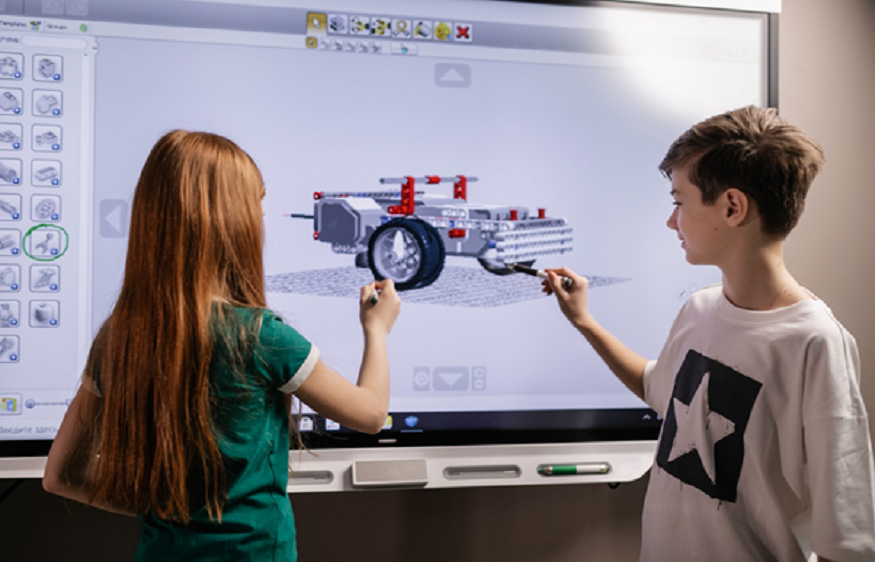
Artificial intelligence is no longer a future idea in education. It is already sitting inside lesson plans, learning apps, assessment tools, content platforms, and school management systems. In 2026, smart classrooms will be faster, more adaptive, and more data-driven. Yet one truth remains stronger than ever. Technology may support learning, but teachers still shape it.
A smart classroom does not become meaningful because it has the latest digital board, AI tool, or automated feedback system. It becomes meaningful when a teacher knows how to use these tools with care, purpose, and human understanding. AI can process information quickly. It can suggest activities, generate questions, personalise practice, and track progress. But it cannot fully understand a child’s silence, hesitation, confidence, fear, curiosity, or emotional need.
That is where teachers remain central.
AI Can Support Learning, But Teachers Give It Direction
AI tools are powerful when used well. They can help teachers save time, create differentiated resources, simplify complex topics, and offer students more practice. For example, a teacher can use AI to generate reading passages at different levels for the same class. This helps advanced learners stay challenged while struggling learners receive support without feeling left behind.
This is one of the strongest benefits of an AI course for educators. It gives teachers more room to focus on what matters most: observing learners, guiding discussions, building confidence, and creating meaningful classroom experiences.
However, AI is only as useful as the intention behind it. A tool can suggest a lesson outline, but the teacher knows whether that outline matches the learners’ age, language level, culture, mood, and classroom reality. A platform may recommend an activity, but the teacher decides whether it will spark thinking or keep students busy.
In other words, AI can assist with planning, but teachers design the learning journey.
The Human Connection Still Drives Motivation
Students do not learn only because content is available. They learn because they feel seen, supported, and encouraged. A child who is afraid to speak in class may not need another AI-generated worksheet. They may need a teacher who notices their discomfort and creates a safe moment for participation.
This emotional side of learning cannot be automated.
In smart classrooms, students may receive instant feedback from digital tools. But instant feedback is not always meaningful feedback. Sometimes, a student needs more than “correct” or “incorrect.” They need someone to say, “You are close. Try thinking about it this way.” They need tone, patience, reassurance, and belief.
Teachers bring warmth into learning. They understand when to push, when to pause, when to explain again, and when to simply listen. These small human decisions often make the biggest difference.
Smart Classrooms Need Smarter Teacher Judgment
AI can generate content in seconds, but not all content is suitable. Some answers may be too complex. Some examples may not fit the local context. Some responses may carry bias, outdated assumptions, or unclear reasoning. This is why teachers need strong AI teaching skills in 2026.
These skills are not only technical. They include the ability to question, evaluate, adapt, and guide AI-supported learning responsibly. Teachers need to know when AI output is useful, when it needs editing, and when it should not be used at all.
For example, if AI creates a writing prompt that is culturally insensitive or too advanced for a class, the teacher must recognise the issue. If AI gives a student an answer without helping them think, the teacher must redesign the task. If students depend too heavily on AI for homework, the teacher must teach digital honesty, originality, and critical thinking.
The future-ready teacher is not someone who blindly uses technology. It is someone who uses technology with professional judgment.
AI Cannot Replace Classroom Ethics
Education is not only about marks, speed, or performance. It is also about values. Students need to learn how to think honestly, use digital tools responsibly, respect other voices, and understand the limits of technology.
This is especially important when discussing how to use AI in the classroom. Teachers must help students see AI as a learning partner, not a shortcut. They need to explain when AI can help with brainstorming, revision, translation, or practice, and when it becomes misused.
A student who copies an AI-generated essay may complete the task, but miss the learning. A student who uses AI to improve structure, compare ideas, or ask better questions may grow as a learner. The difference depends on guidance.
Teachers help students build this ethical boundary. They create classroom norms around transparency, citation, effort, and independent thinking. Without this guidance, smart classrooms can easily become dependent classrooms.
Personalisation Still Needs a Personal Touch
AI can personalise learning paths, but teachers personalise learning relationships. This difference matters.
A platform may show that a student is weak in fractions. But a teacher may know why. Perhaps the student missed earlier lessons. Perhaps they are afraid of maths. Perhaps they understand the concept orally but struggle with written problems. Perhaps the real issue is language, not maths.
Data can show patterns, but teachers interpret the story behind those patterns.
In 2026, the best smart classrooms will not be the ones where AI makes every decision. They will be the ones where teachers use AI insights to ask better questions. Why is this learner struggling? What kind of support will work? Does this student need practice, encouragement, peer support, or a different explanation?
AI can show the signal. Teachers understand the learner.
The Teacher’s Role Is Expanding, Not Shrinking
There is a common fear that AI will reduce the importance of teachers. In reality, it is changing what good teaching requires. Teachers are moving from being only content deliverers to learning designers, mentors, facilitators, ethical guides, and critical users of technology.
This shift does not make teaching easier. It makes professional development more important.
Teachers now need to understand prompt writing, digital assessment, AI-supported differentiation, learner data, online safety, and academic integrity. At the same time, they must continue to nurture creativity, empathy, collaboration, curiosity, and confidence.
The modern teacher stands at the centre of both worlds: human development and digital transformation.
Smart Classrooms Must Stay Human First
The real promise of AI in education is not replacing teachers. It is giving teachers more time and better tools to do deeply human work. When used wisely, AI can reduce repetitive tasks, support lesson preparation, offer quick practice materials, and help identify learning gaps.
But the soul of education still belongs to human interaction.
A teacher can turn an AI-generated activity into a meaningful discussion. A teacher can connect a digital lesson to a learner’s lived experience. A teacher can notice when a class is tired, when a student is discouraged, or when a simple question has opened the door to deeper thinking.
Technology can make classrooms smarter. Teachers make them wiser.
Bottom Line
As smart classrooms continue to grow in 2026, the most successful schools will not be those that use the most AI tools. They will be those who prepare teachers to use AI with confidence, care, and purpose. The future of education belongs to teachers who can combine digital fluency with emotional intelligence, critical thinking, and ethical judgment.
AI may change how lessons are planned, delivered, and assessed. But it cannot replace the human presence that helps learners feel safe, motivated, and capable. For educators who want to grow with this change, an AI for Educators can be a valuable step toward building the right balance between innovation and humanity.
Because the future classroom may be smart, but it still needs a teacher at its heart.